
I Wrote Hail Estimates for Nineteen Years, and I Only Ever Bought One Thing for My Own Car
Why the damage that costs the most is the damage nobody watches happen, and what $89.99 stops before it starts
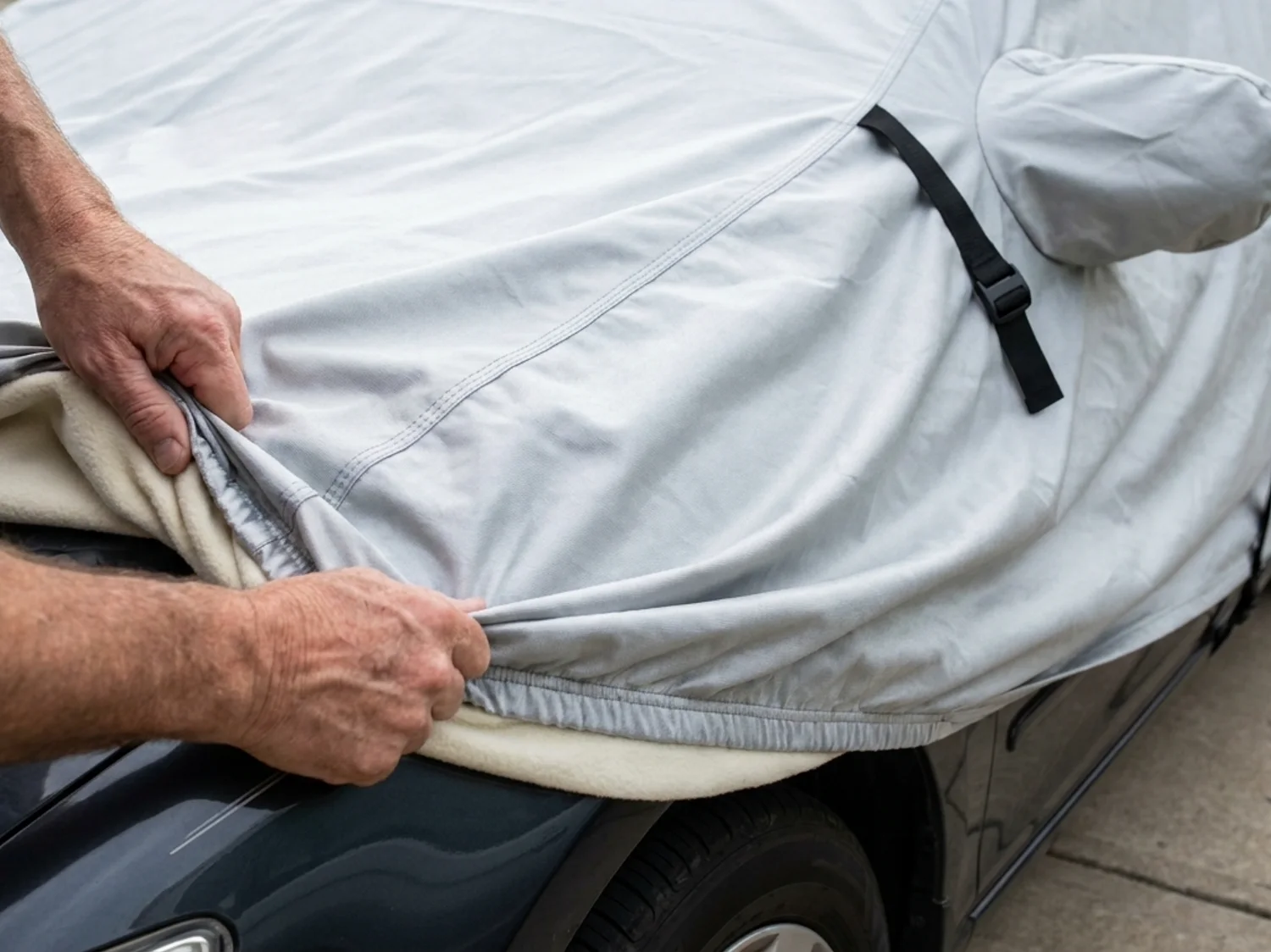
"You can always tell which ones sat outside. I can tell from the doorway." - Ray, who sprayed paint in our shop for thirty-one years
I Spent Nineteen Years Writing Down What Weather Does to Paint
If you have ever walked out in the morning and found the roof of your car speckled with something you had to scrape off with a fingernail...
If you have ever run a cloth over a hood and felt grit under it, and kept going anyway...
If you have ever looked at a five year old car in your own driveway and thought it looked ten...
Then read to the end, because a claims desk in Ohio is where I stopped believing that parking outside is free.
My name is Dale. I am 58. For nineteen years I wrote estimates in a body shop off Route 4, which means I spent my working life putting a dollar figure on things the weather did to other people's cars.
People came in angry about dents. Almost nobody came in about the thing that had actually cost them the most.
The Damage That Costs the Most Is the Damage Nobody Watches Happen
A hailstorm is loud. It happens in eleven minutes, everyone hears it, and the driveway is full of ice when it is over.
The other kind is silent. It takes four summers and nobody notices a single day of it.
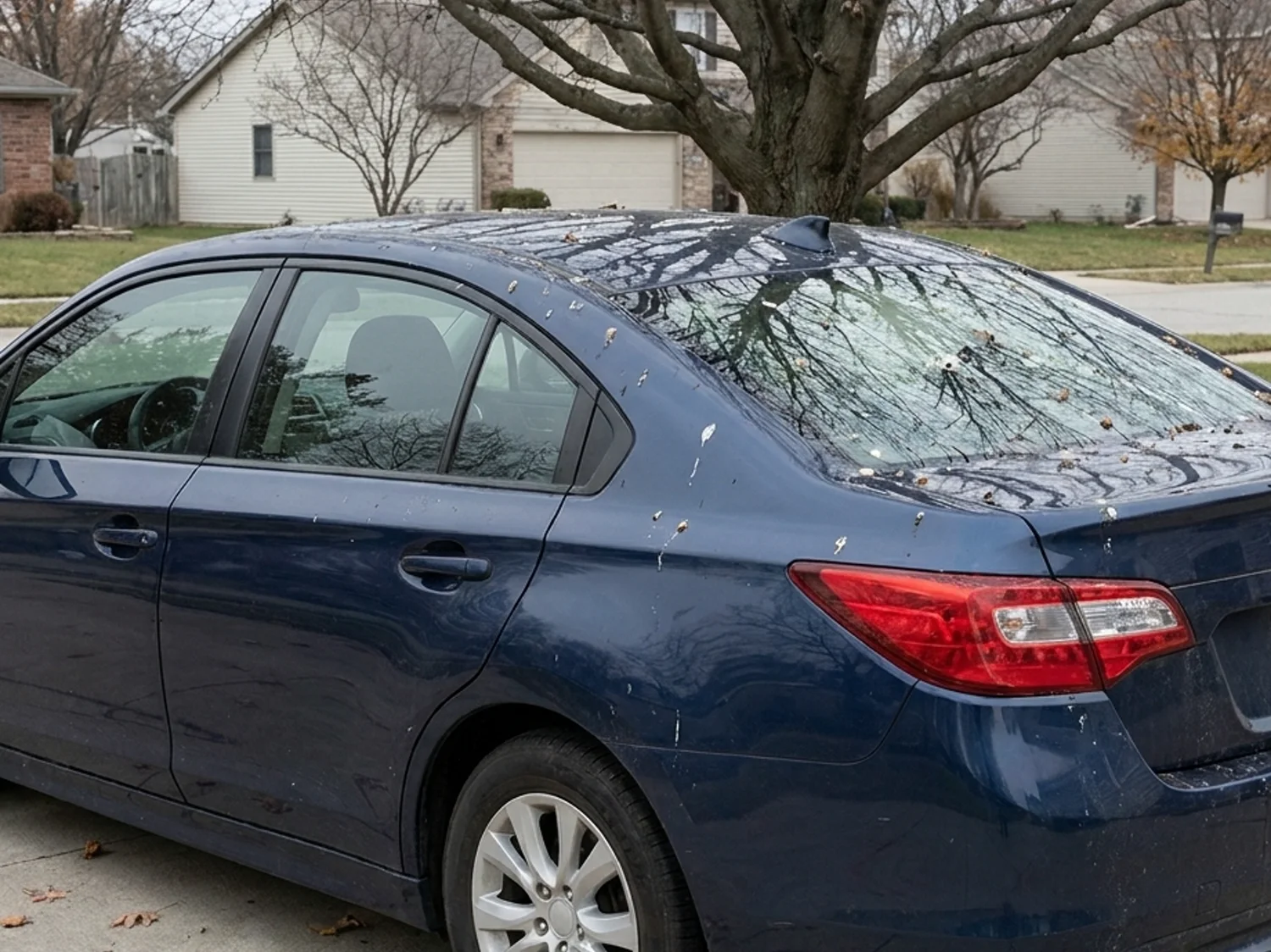
Sun sits on the flat panels, the roof and the hood and the trunk lid, and slowly cooks the clear layer on top of the colour. Then sap lands on it. Then a bird. Then the sap sits there through three days of afternoon heat.
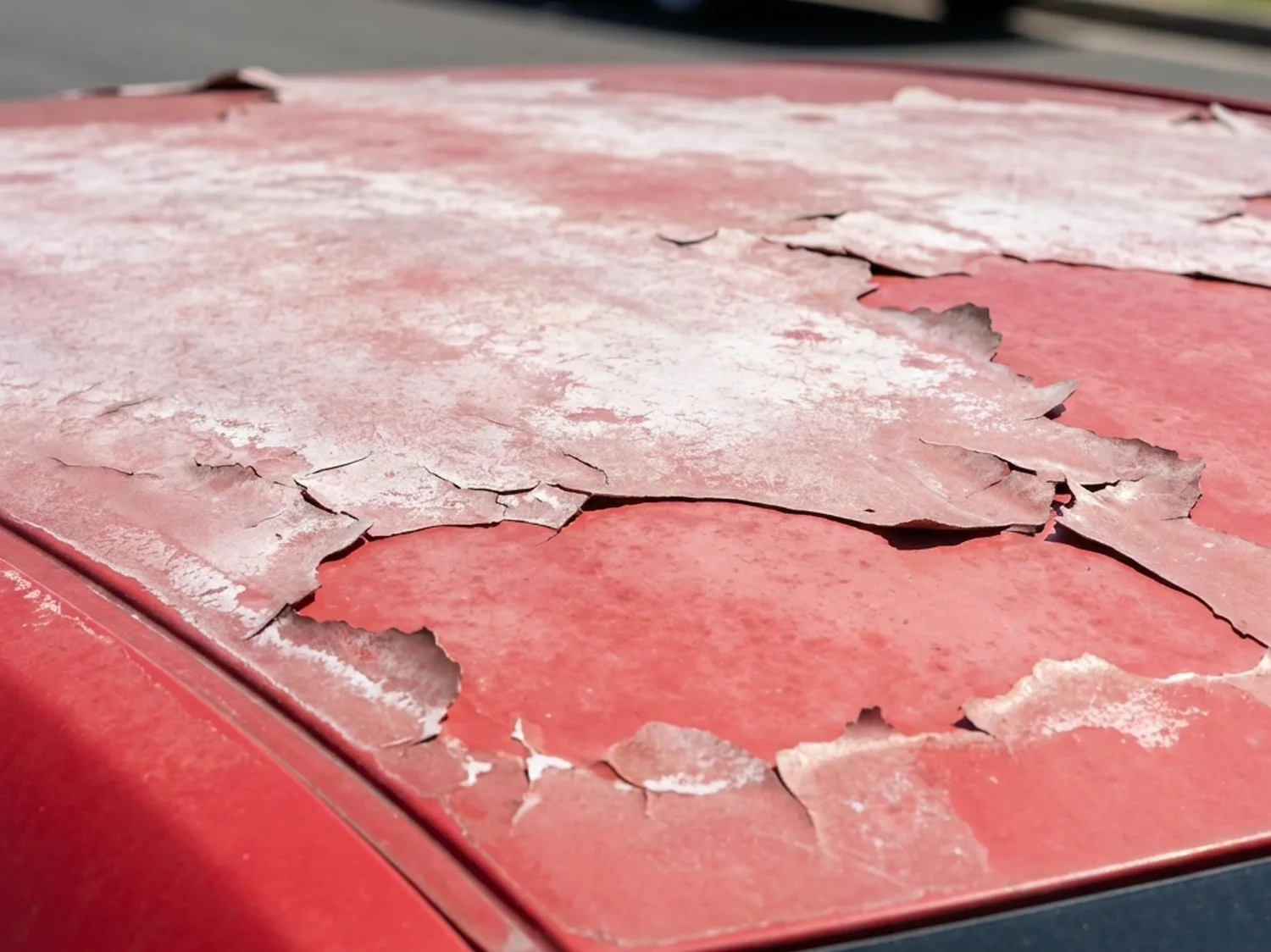
By the time you can see it, the panel is not dirty. It is etched. Washing does nothing, because there is nothing left on top to wash.
I wrote that estimate maybe four hundred times. Roof and hood, sand, seal, respray, blend the pillars. It was never a small number.
Two Thousand Dollars for Something That Took Four Minutes
March, a few years back. A woman brought in a two year old crossover, silver, twenty-nine thousand miles.
Golf ball hail had come through overnight while it sat in her driveway. Eleven dents on the roof, six on the hood, one on the tailgate lip.
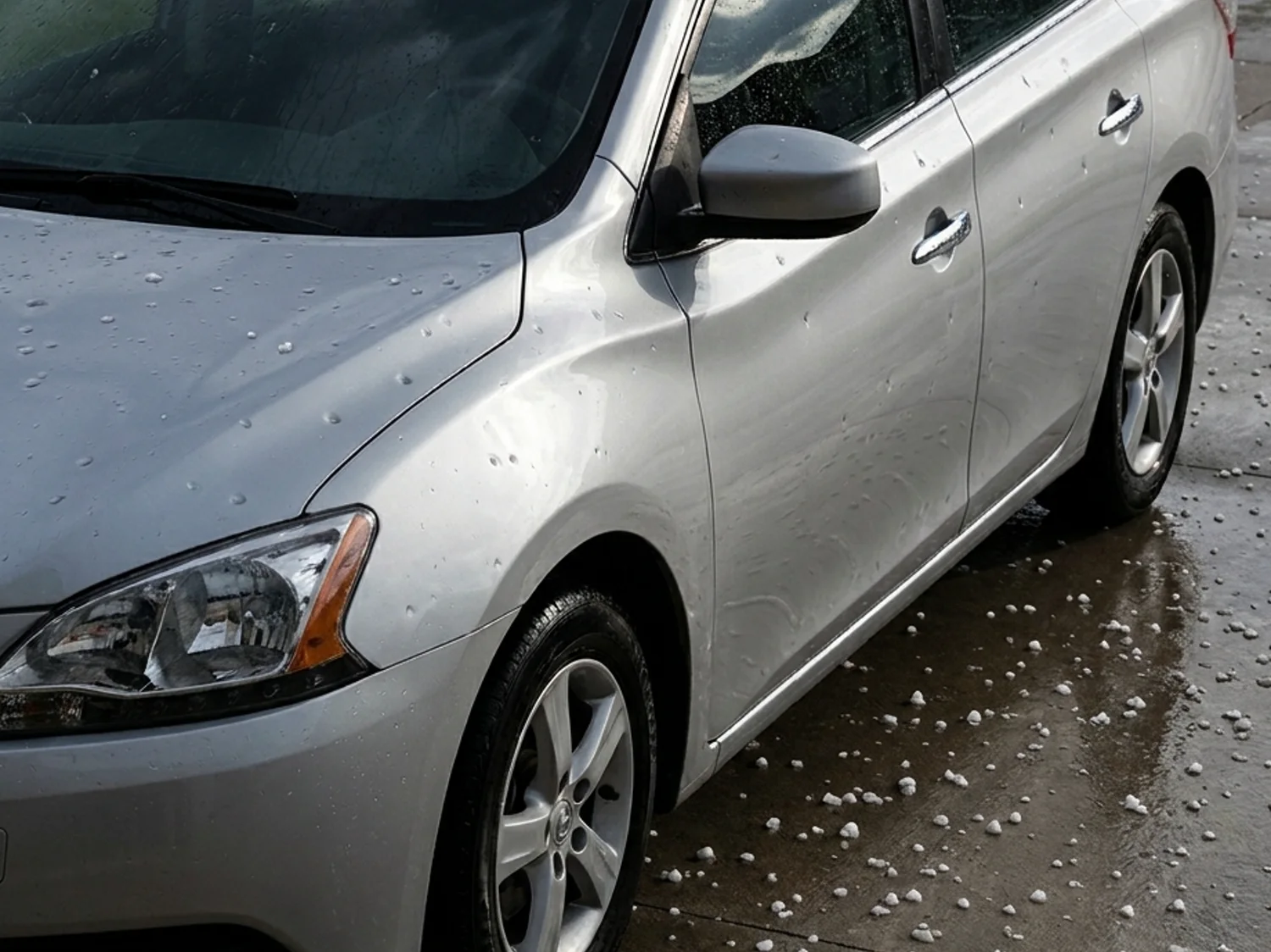
Her deductible was a thousand. The estimate was over two.
She asked me the question everybody asks. "Is there anything I could have done?"
There was. It was folded in the corner of my own garage at that moment, and it had cost me less than her deductible by a factor of eleven.
I Had Already Spent Six Hundred Dollars Avoiding the Real Problem
Before I got sensible, I bought things. Everyone in this position buys things.
A tub of paste wax every spring, about $30 a year, five years running. A ceramic spray sealant at $120 that promised two years and gave me about seven months.
A blue plastic tarp for $35 that lasted one windy night and left two long scratches down the passenger door when it flapped.
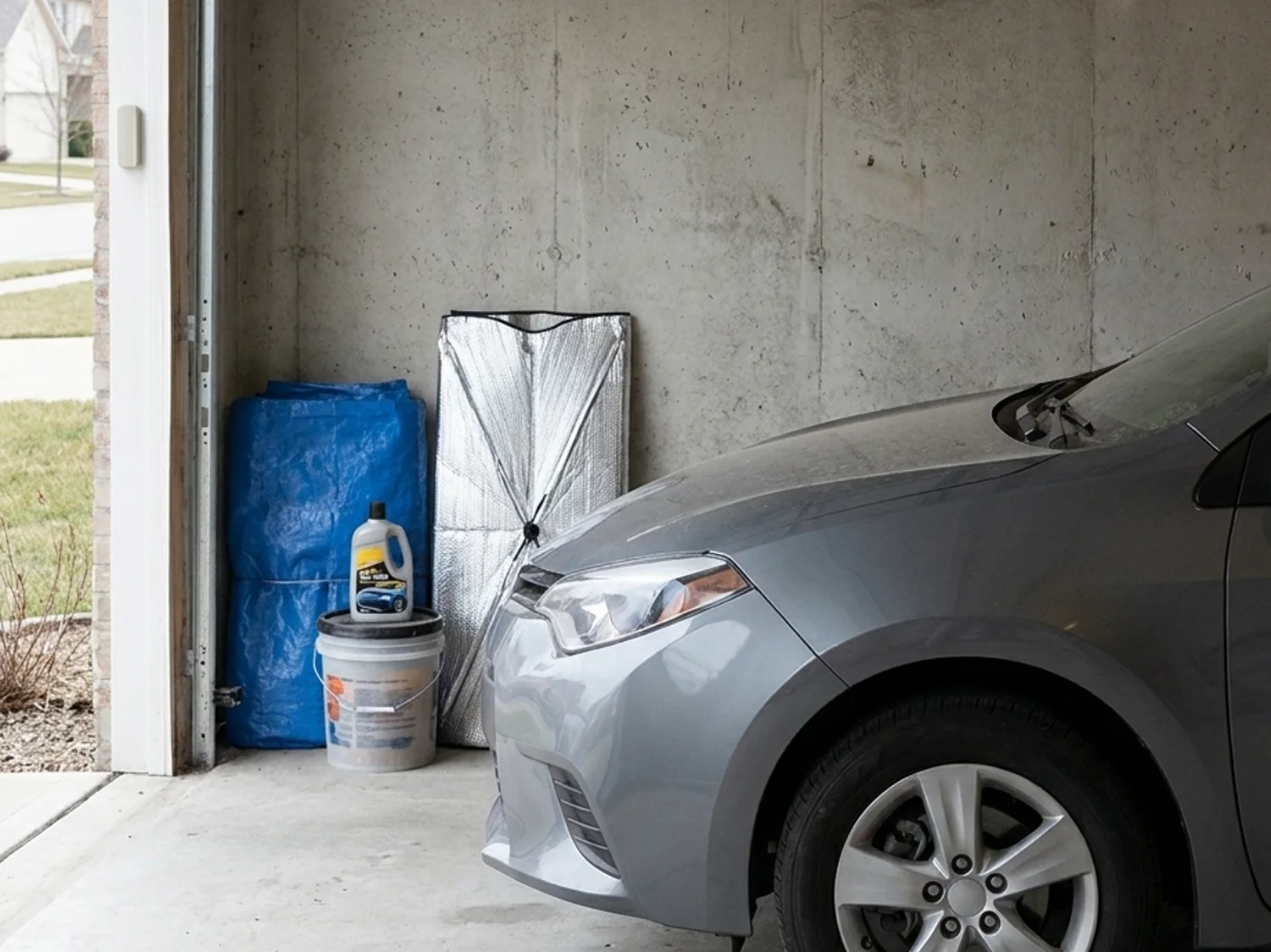
A windshield shade at $28 that protected the dashboard and none of the paint. And $180 to have swirl marks polished out of a black trunk lid.
That is five hundred and thirteen dollars, spent in pieces, over five years, on the outside of the problem.
Every one of those was a way of making the paint better at surviving what was landing on it. None of them stopped anything from landing.
Ray Had Been Saying the Same Sentence for Thirty Years
Ray sprayed paint in our shop until he retired. He had a habit that used to annoy the front desk: he would walk out to the lot and look at a car before he read the file.
He told me once, holding a fender in the booth light, that he had never in three decades resprayed a panel that lived under a cover.
"Not one," he said. "They come in for other reasons. Never for this."
I had been writing the estimates. He had been fixing them. Neither of us had ever put that sentence in front of a customer.
The Problem Has a Name: Clear-Coat Burn
Your paint is not the top layer of your car. The top layer is a thin clear coat, and it is the part doing all the work.
Ultraviolet light breaks it down from above. Sap and droppings sit on it and eat down into it, because both of them are mildly acidic and both of them bake in the sun.
Clear-coat burn is what the two do together. Once it is through the clear layer, colour goes chalky and there is no product on any shelf that brings it back.
So the fix is not a better wax. A wax is a sacrificial layer measured in weeks. The fix is a physical roof over the roof.
Why a Tarp and a Ten Dollar Cover Make It Worse
Here is where most people get burned twice, and it is worth two minutes of your reading.
A cheap cover is one thin sheet of woven plastic with nothing on the inside. It has no straps, so it moves.
Wind lifts it, dust gets under it, and then the whole thing works like a sanding block every time the wind comes up. I have seen the scratch pattern. It goes in long arcs, front to back.
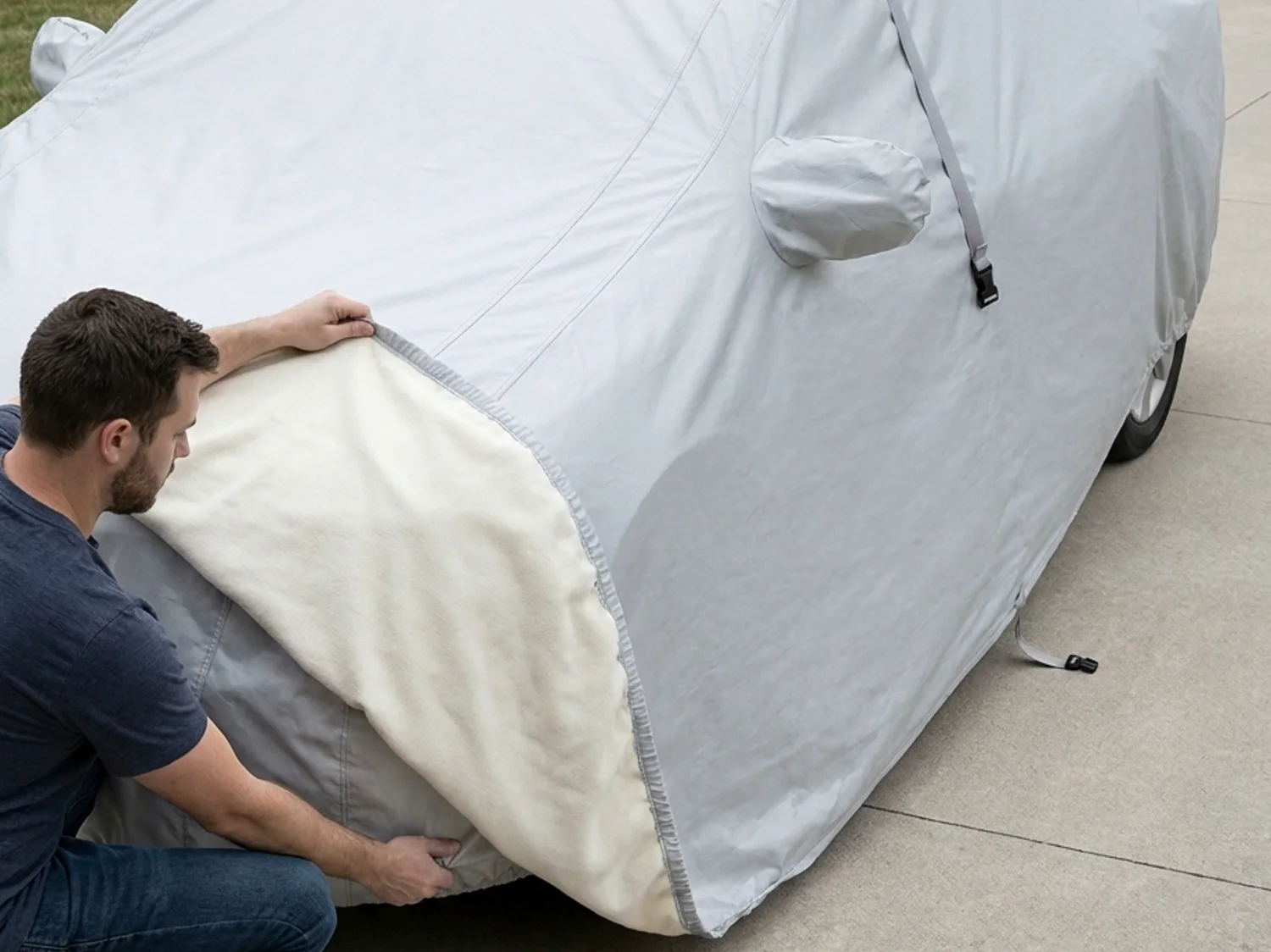
A cover only protects a car if two things are true. It has to be lined on the inside, and it has to be strapped so it cannot move. That is the whole difference between protection and a two hundred dollar polish job.
So I Bought the Thing I Used to Tell Customers to Buy
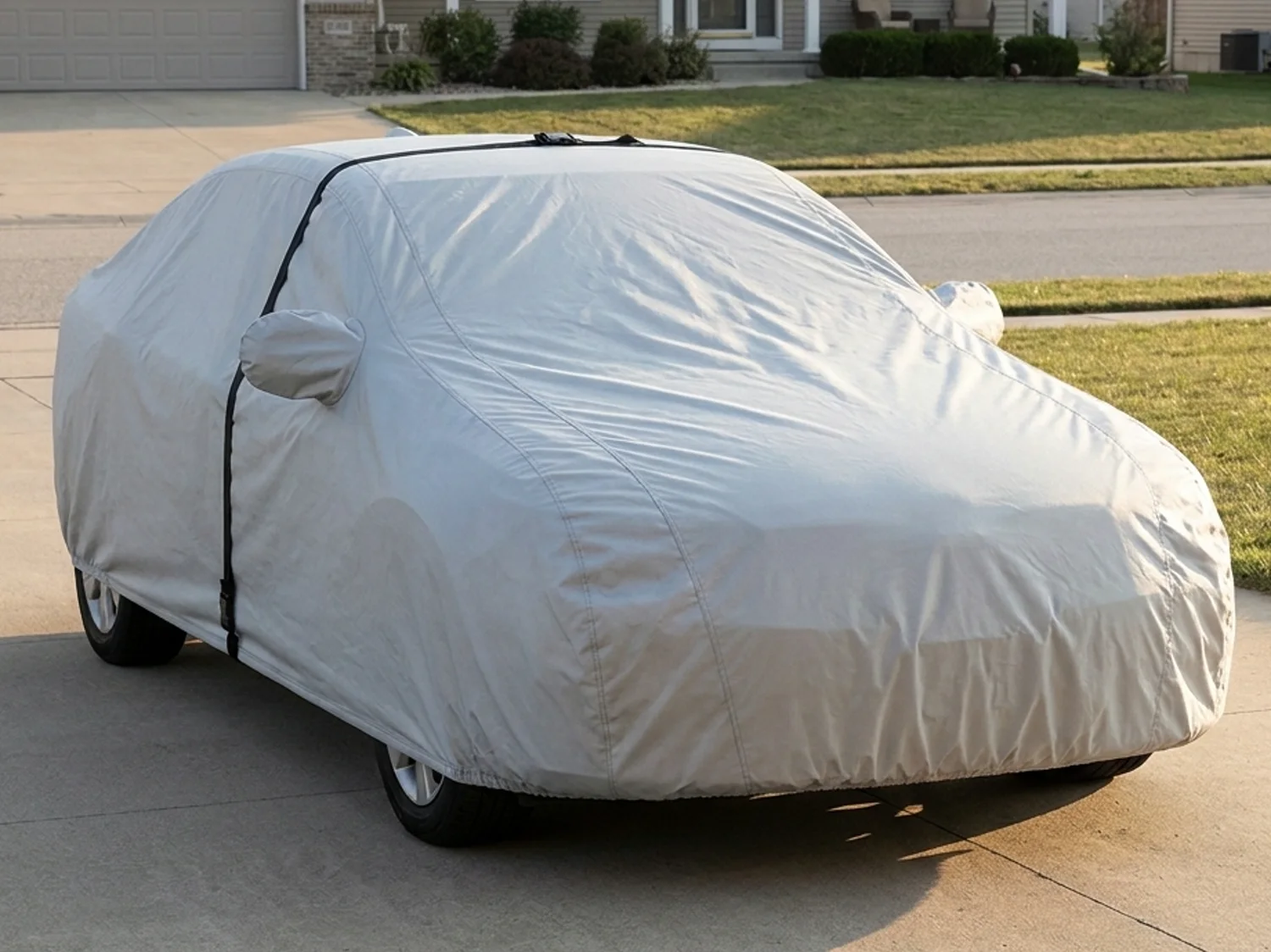
It is called the Tarnuvek All-Weather Car Cover, and it costs $89.99. My wife looked at the box and said that was a lot for a sheet. We will come back to that.
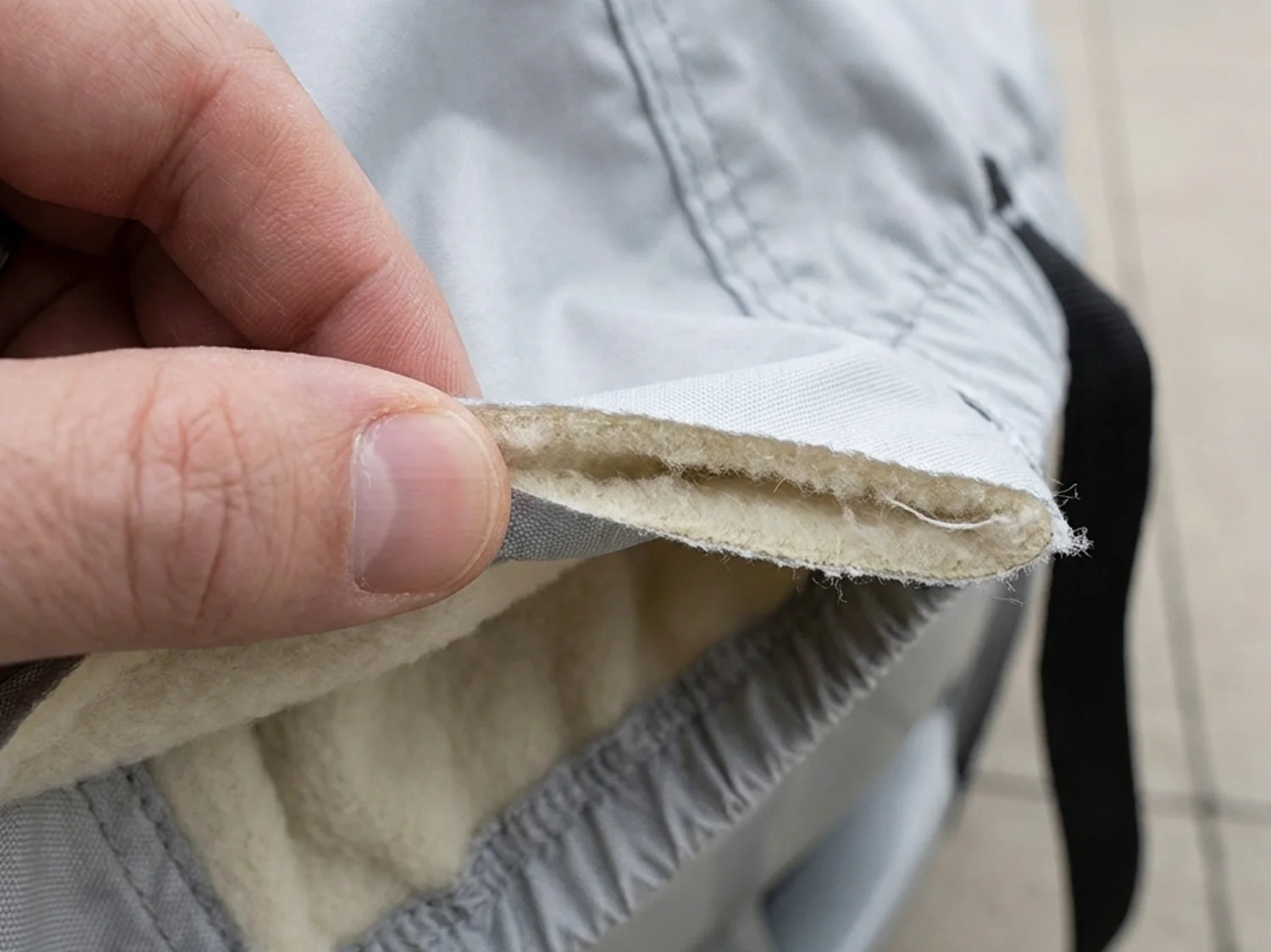
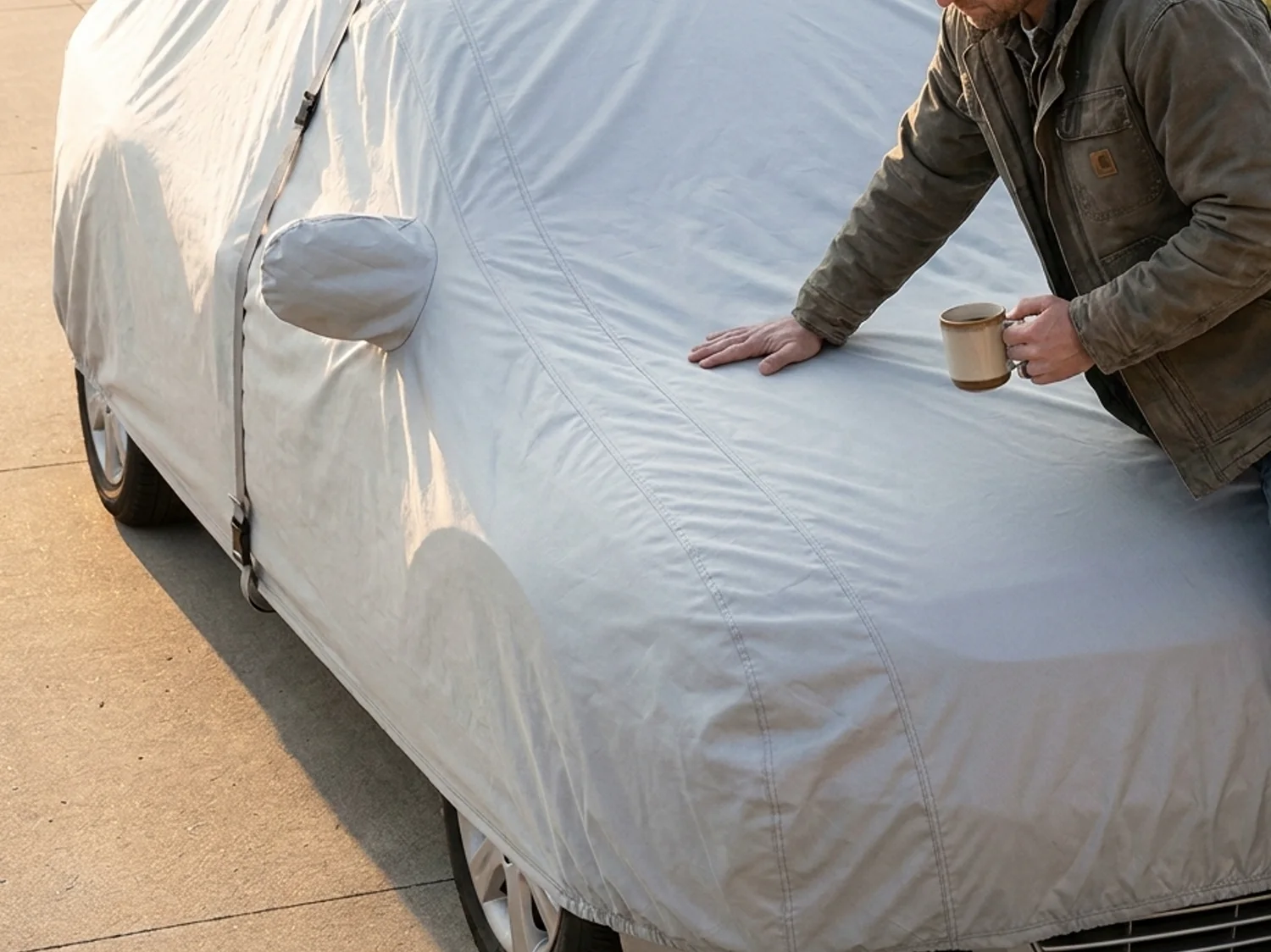
It is built in five layers. A waterproof outer face that water runs off instead of soaking into. A middle that blocks ultraviolet light. A padded layer that takes the sting out of what falls on it.
A breathable layer so warm air and moisture leave instead of sitting against the paint. And on the inside, against your car, a soft fleece lining.
The seams are welded rather than sewn open, so water has no stitch holes to find.
- Five bonded layers, roughly the thickness of a folded towel at the shoulder
- Elastic hem front and rear that tucks under the bumpers
- A webbing strap and buckle that passes under the body and pulls the whole thing tight
- Moulded mirror pockets, so it sits where it is put
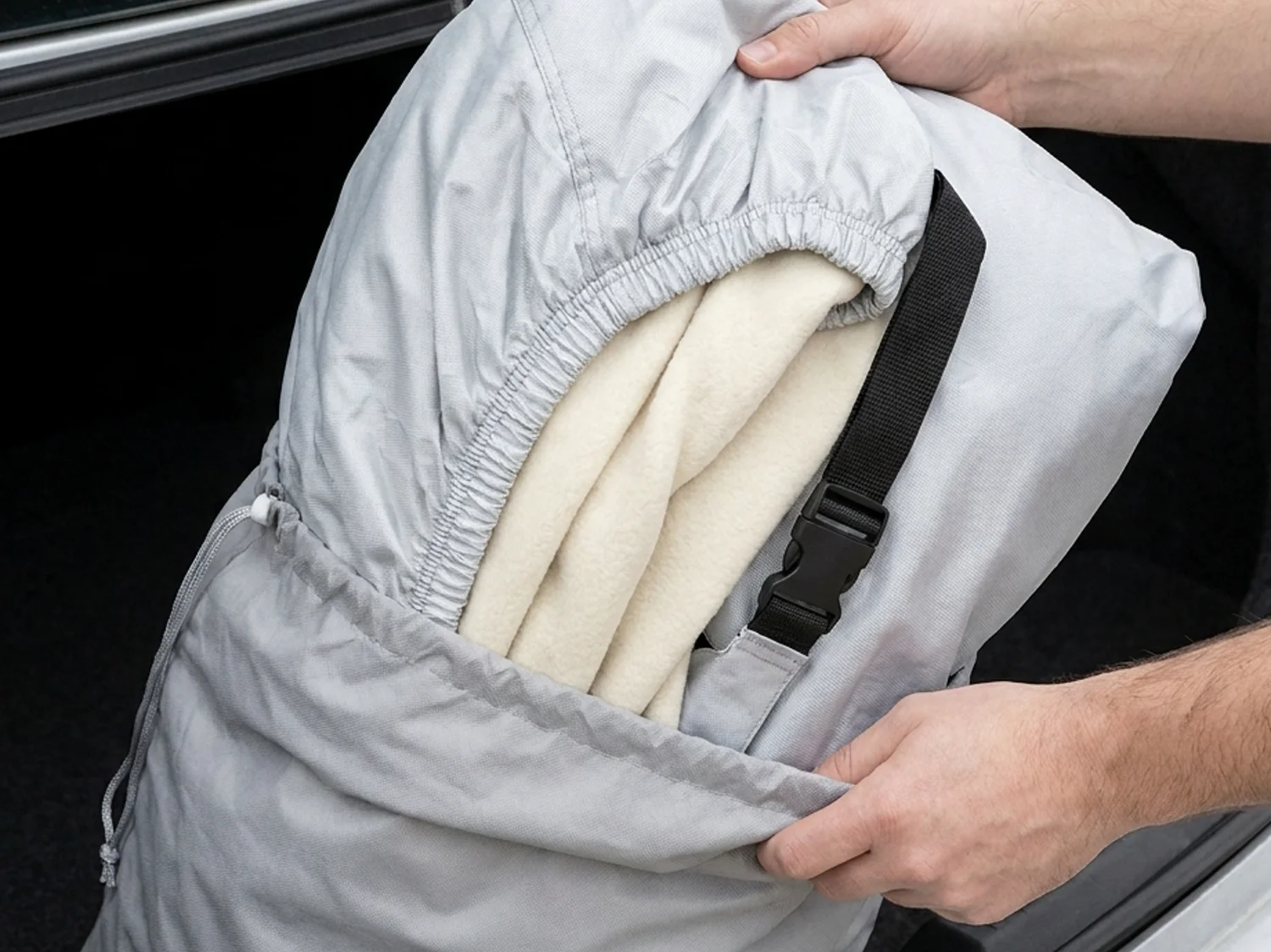
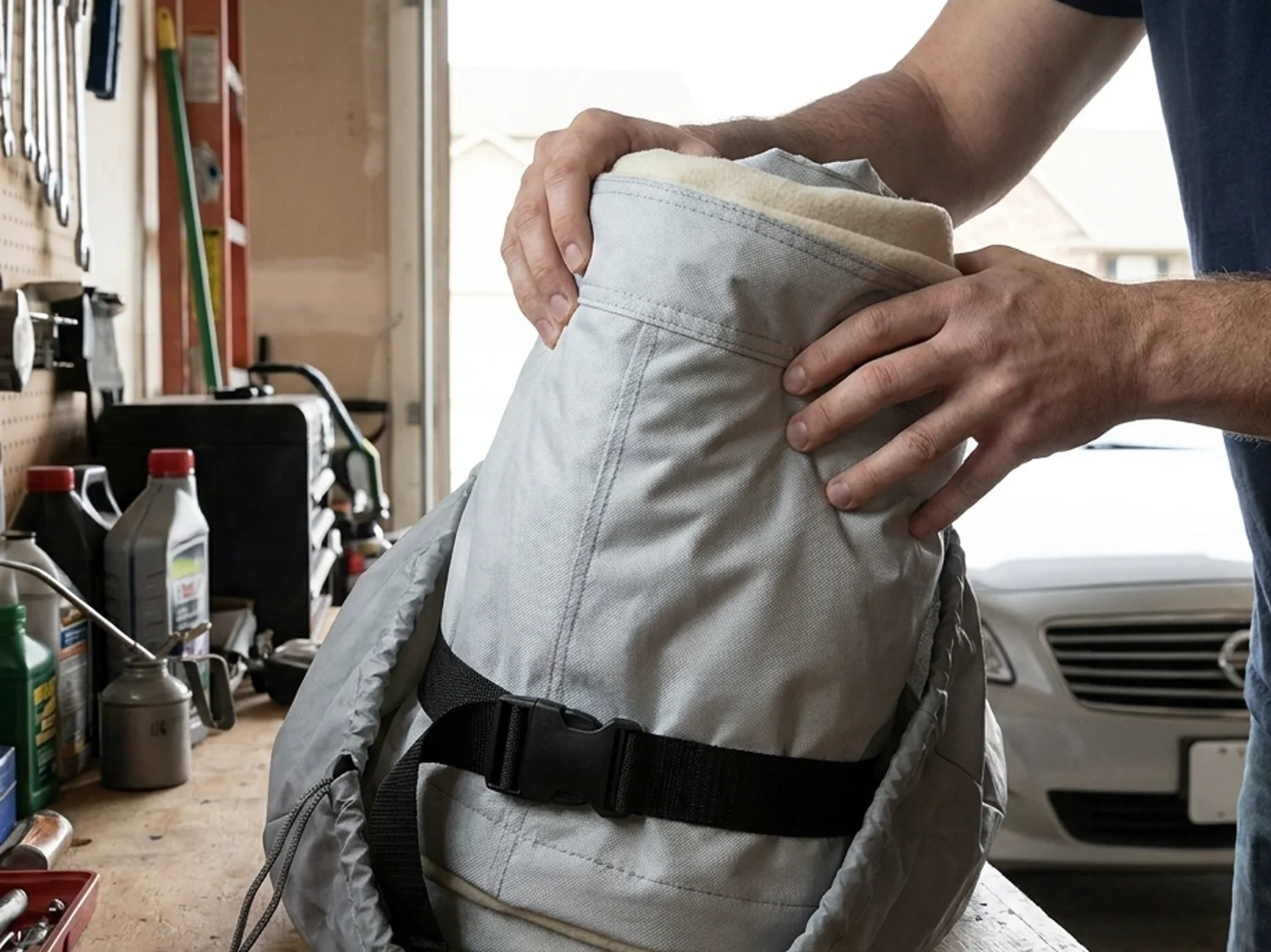
- Three sizes by vehicle length, and a storage bag in the box
I ordered the sedan size for my own car and told nobody at work.
Check Your Size and Get Yours for $89.99Seven Reasons It Has Not Come Off Since
One, the water goes somewhere else. The first heavy rain, I stood at the kitchen window and watched it bead up and run off the shoulder onto the driveway.
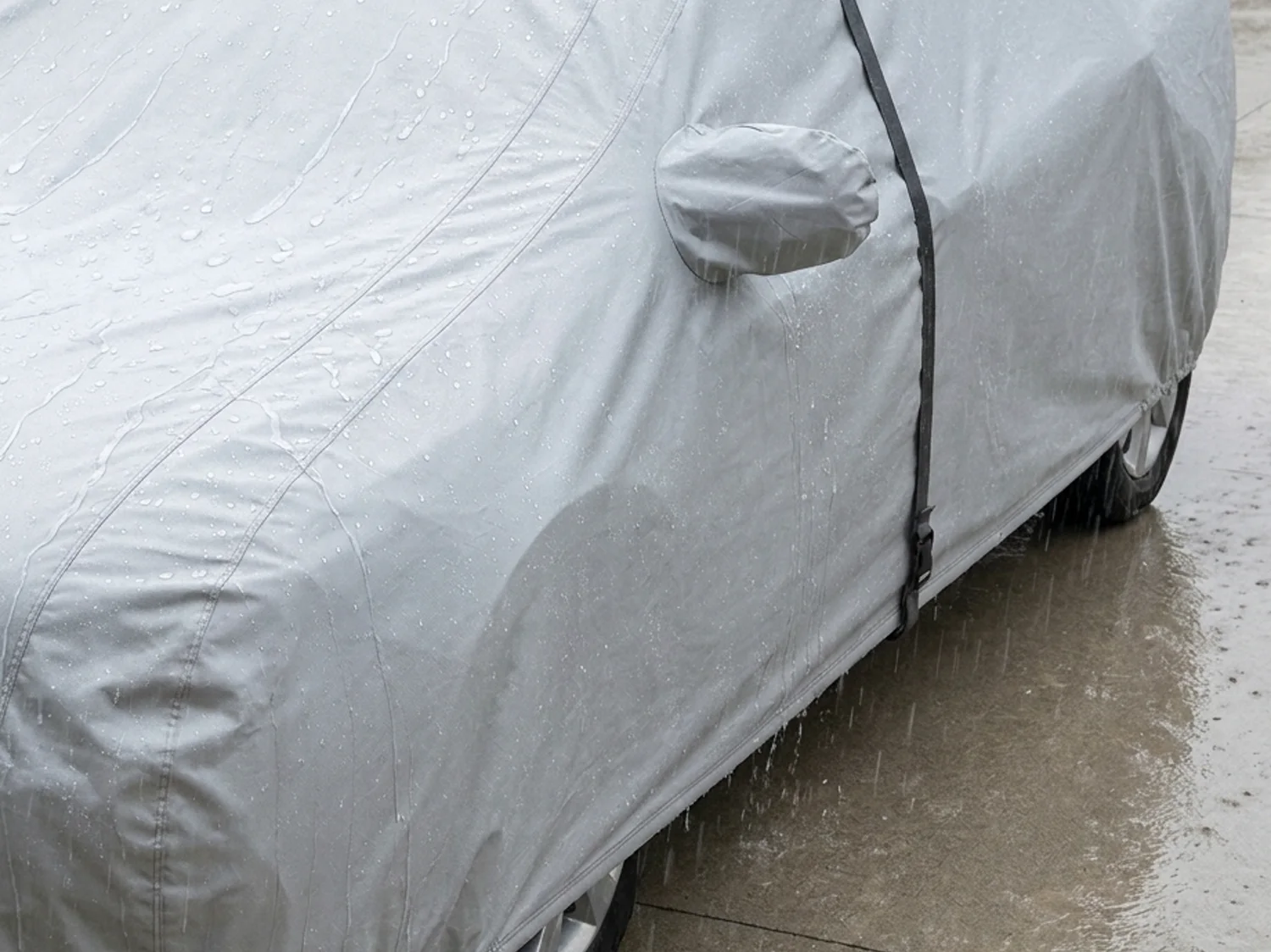
Two, the flat panels are in shade. Roof, hood, trunk lid. Those are the three panels I wrote up the most, and they now spend the day under a layer that blocks the light instead of holding it.
Three, sap lands on fabric. They still land. They just land on something I can shake off in the driveway instead of something a shop has to sand.
Four, it does not move. The strap goes under the car and clips, the hem tucks under the bumpers, and the whole thing stays where it is put.
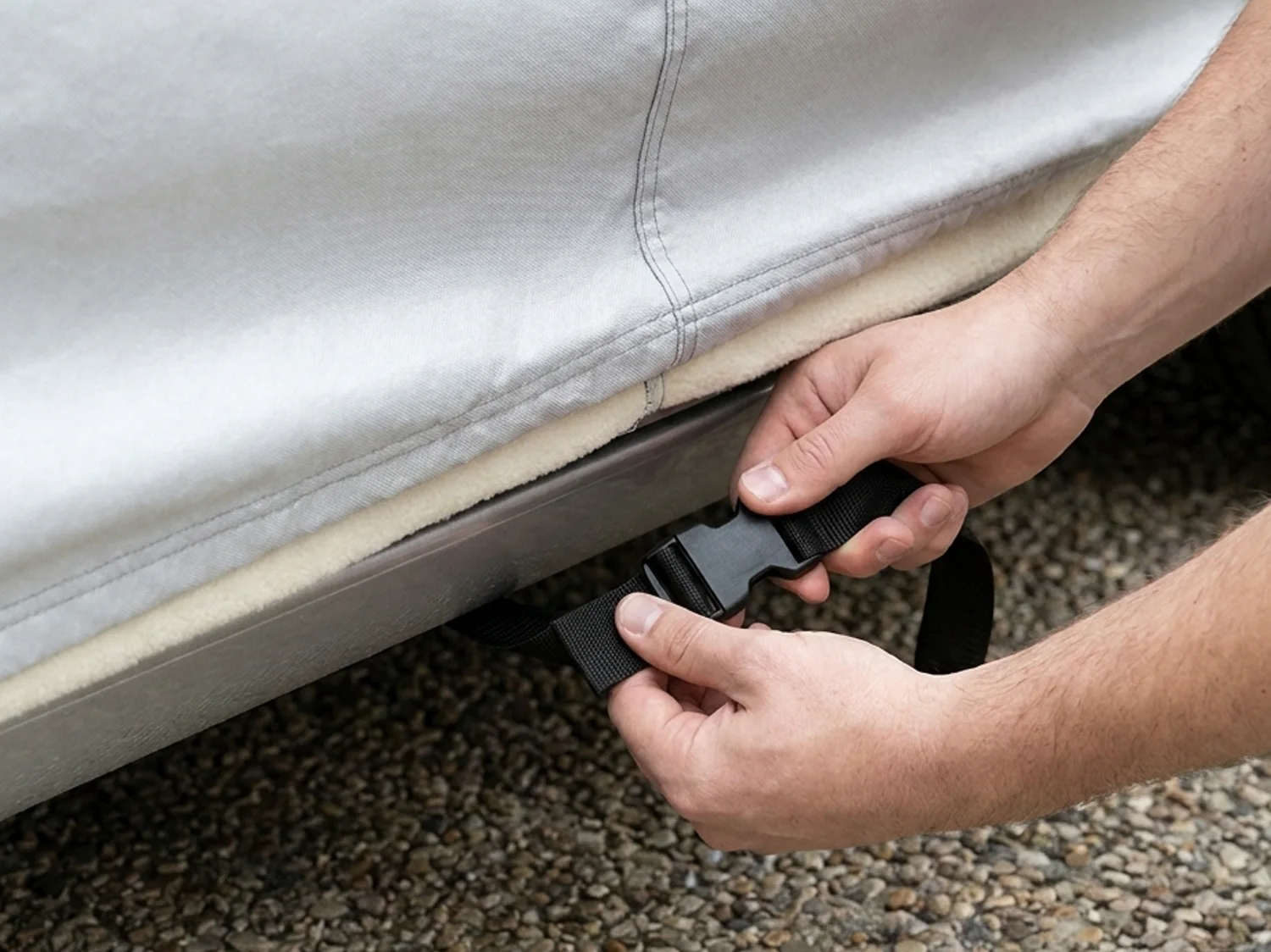
Five, the inside is soft. The fleece side is the side that touches paint, which is exactly the thing every cheap cover gets wrong.
Six, ice comes off with it. In February I pulled it back and the windscreen underneath was clear and dry. No scraper, no ten minutes of idling.
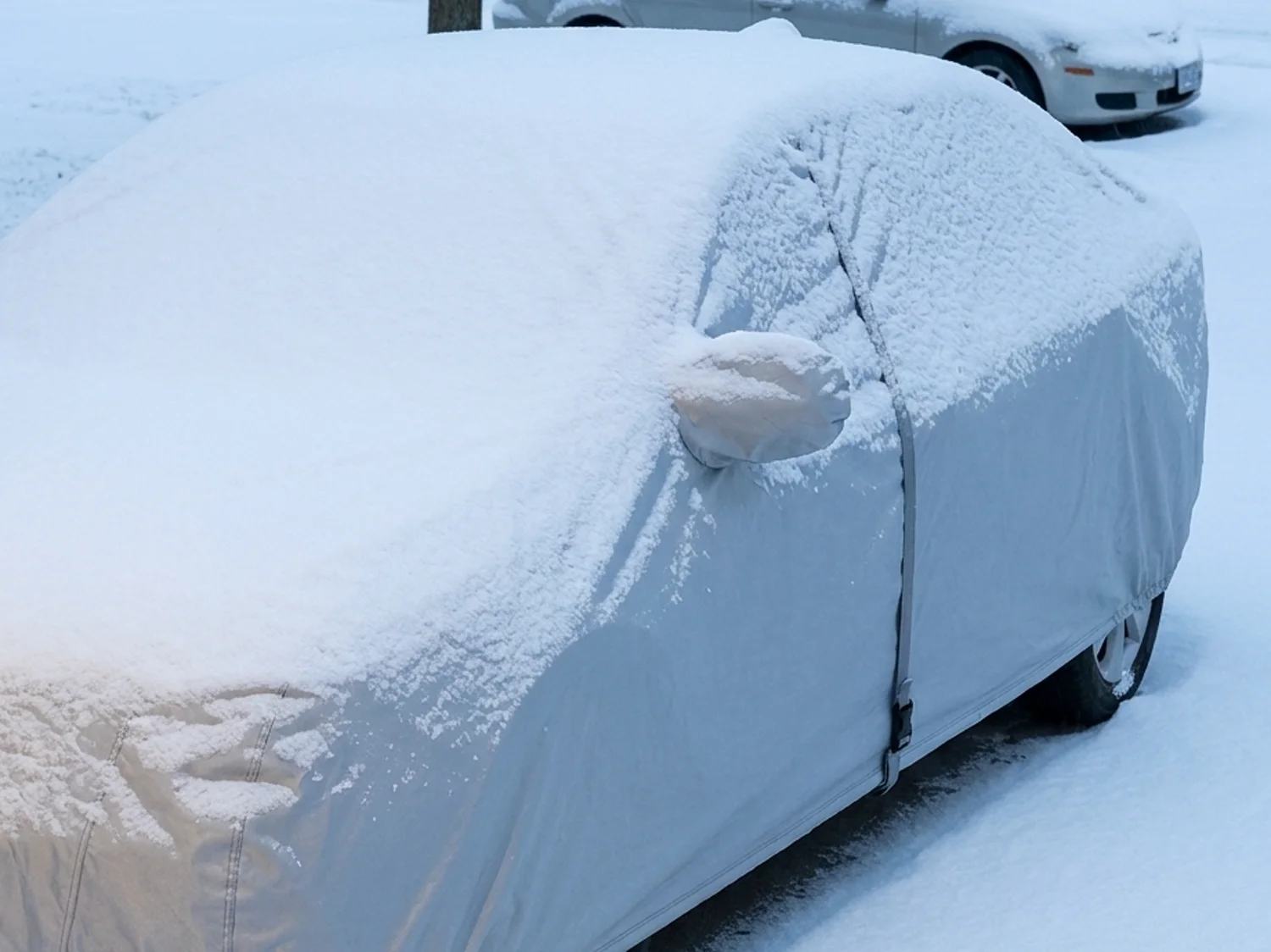
Seven, about two minutes. Front to back, hem tucked, strap clipped. My wife does it in less than I do, which she mentions.
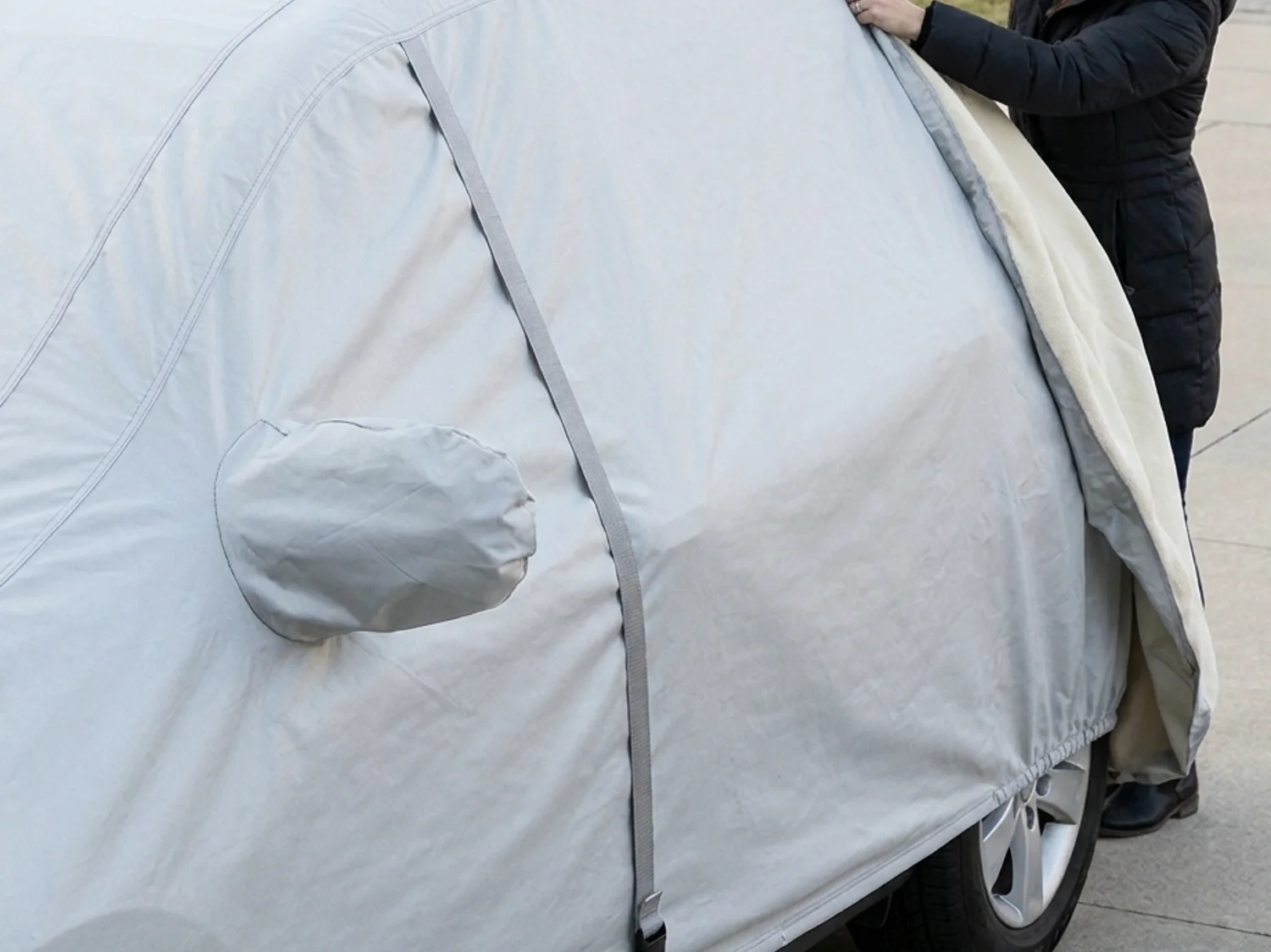
Here Is What It Does, Without the Story
It keeps water off the paint and out of the seams.
It puts the flat panels in shade all day, which is where clear-coat burn starts.
It takes the impact of what falls out of a tree or out of the sky.
It breathes, so the car is not sitting in its own damp.
It is lined and strapped, so it protects instead of scratching.
Eighty-Nine Dollars Against the Estimates I Used to Write
My wife said it out loud when I told her the price, and it is the first thing most people say. Ninety dollars for a sheet of fabric.
Set it against what is already spent. Most people in this position have spent it, they just spent it in pieces. Wax, a sealant, a tarp, a shade, one polish job. Mine came to five hundred and thirteen.
Set it against a repaint. The cheapest roof and hood respray I ever wrote up was eight hundred and change, and that was a small car and a friendly rate.
Set it against a covered claim. A deductible on hail damage is usually a thousand dollars before the insurer pays a cent, and the claim follows your premium around for three years.
And set it against what the category actually charges. A five layer fitted cover from the big names runs between $140 and $200. Under ninety dollars, what you find is two or three layers that let water through.
This one is $89.99, in three sizes, with free shipping inside the United States.
Why I Would Not Wait for the First Cold Night
Two reasons, both practical.
The first is that autumn is when the damage stacks up fastest. Sap comes down with the leaves, the birds are moving, and the first freeze arrives before anyone is ready for it.
The second is arithmetic. Orders leave the warehouse within 48 hours and take four to eight business days to arrive.
A cover ordered the night the forecast turns is a cover that arrives after the weather does.
Order the Cover for $89.99Ninety Days, and the Risk Sits With Us
I want to be exact about this part, because I spent nineteen years reading policies that were written to be slippery.
You have ninety days from delivery. Not thirty. Ninety.
Use it. Put it on the car, take it off, leave it out in a storm, do the thing you bought it for. A cover that has never been on a car tells you nothing.
If it does not do what this page says, email us and we send a return address inside two business days. We pay the return shipping, and there is no restocking fee taken off your refund.
The original box is not required, and normal use is not a reason to refuse a return. The refund goes back to the card within five to ten business days of the cover arriving.
Compare it with the big names in this category. Their return window is thirty days, the cover has to come back unused and in its box, and twenty percent of your money stays with them as a handling fee.
Their lifetime warranty is worth reading too. It sits on the $179.99 model, it covers the original buyer only, and every replacement under it costs a further fee of around fifty dollars.
The only thing you are risking is the season you were going to park outside anyway.
The Questions Everyone Asks Before They Order
How do I know which of the three sizes I need
By length, bumper to bumper, not by make. Sedan covers up to 200 inches, SUV up to 215 inches with the extra height, pickup up to 250 inches. Your length is in the owner's manual or on any spec page for your model.
Will it scratch my paint
The side that touches the car is fleece. What scratches paint is grit trapped under a loose unlined cover, which is why the strap and the elastic hem matter as much as the fabric. Put it on a car that has been rinsed, not on a car covered in road salt.
Does it hold water underneath
No. One of the five layers is there to breathe, so warm damp air leaves instead of condensing against the paint. That is the layer cheap covers do not have, and it is why they come off wet on the inside.
How does it handle wind
The hem is elasticated front and rear and tucks under both bumpers, and a webbing strap with a buckle passes under the body and pulls it down. In an exposed spot, clip the strap every time.
Can I leave it on for weeks
Yes, that is what it is built for. If the car is stored for a season, take it off once a month, shake it out and put it back. That is the whole maintenance routine.
Will hail still dent the car
It is fabric, not armour, and nobody should tell you otherwise. The padded layer absorbs a great deal of what lands on it, and it is the difference between small stones marking the paint and marking nothing at all. In serious hail, a garage beats every cover made.
How do I clean it
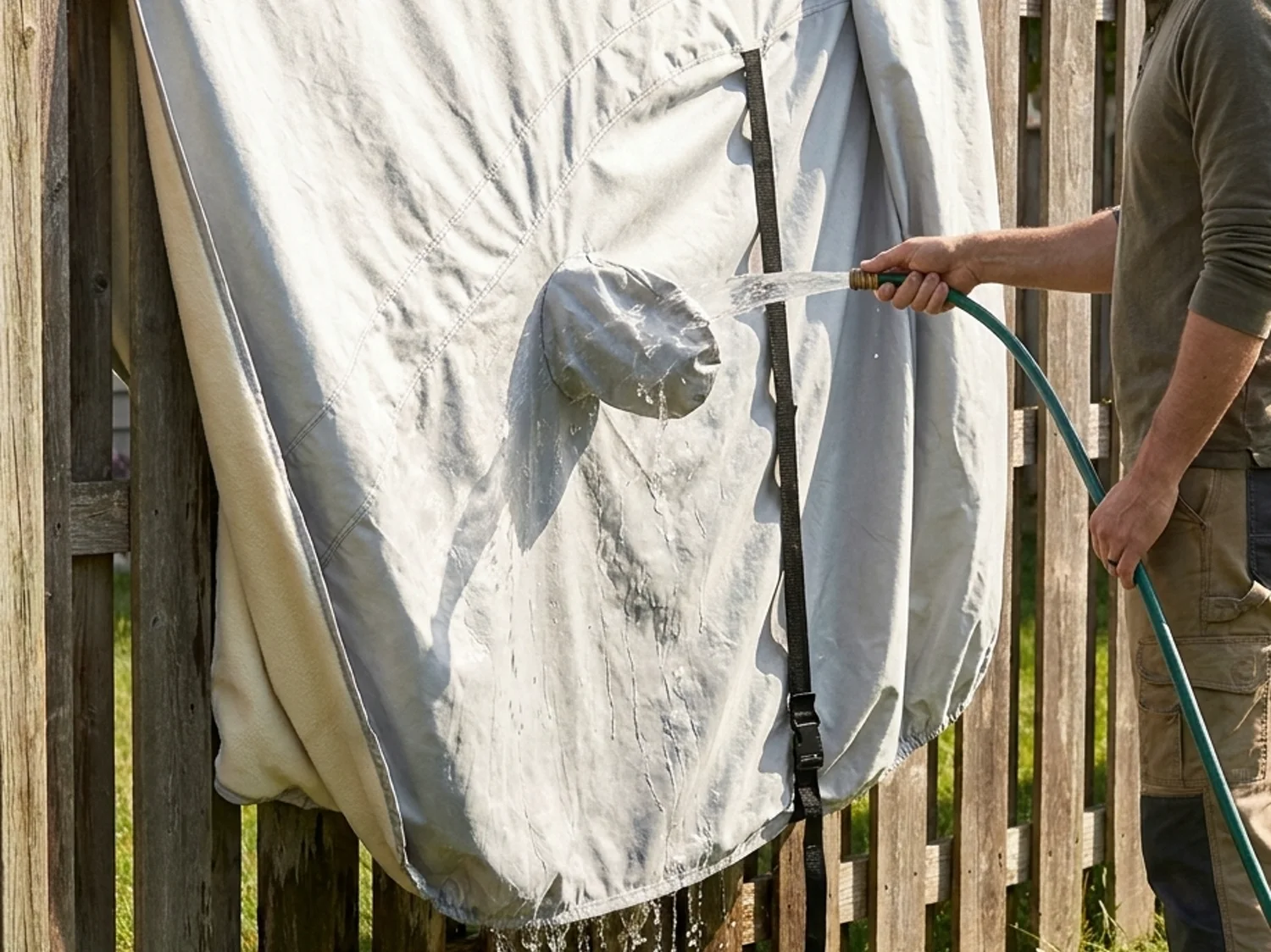
Shake it out on the driveway, hose it down on the lawn, hang it over a fence and let it dry before it goes back in the bag. Do not put it in a machine dryer.
What is in the box
The cover in the size you choose, the strap and buckle fitted, and a drawstring storage bag it rolls back into. Nothing else, and nothing that needs replacing later.
Your Two Choices
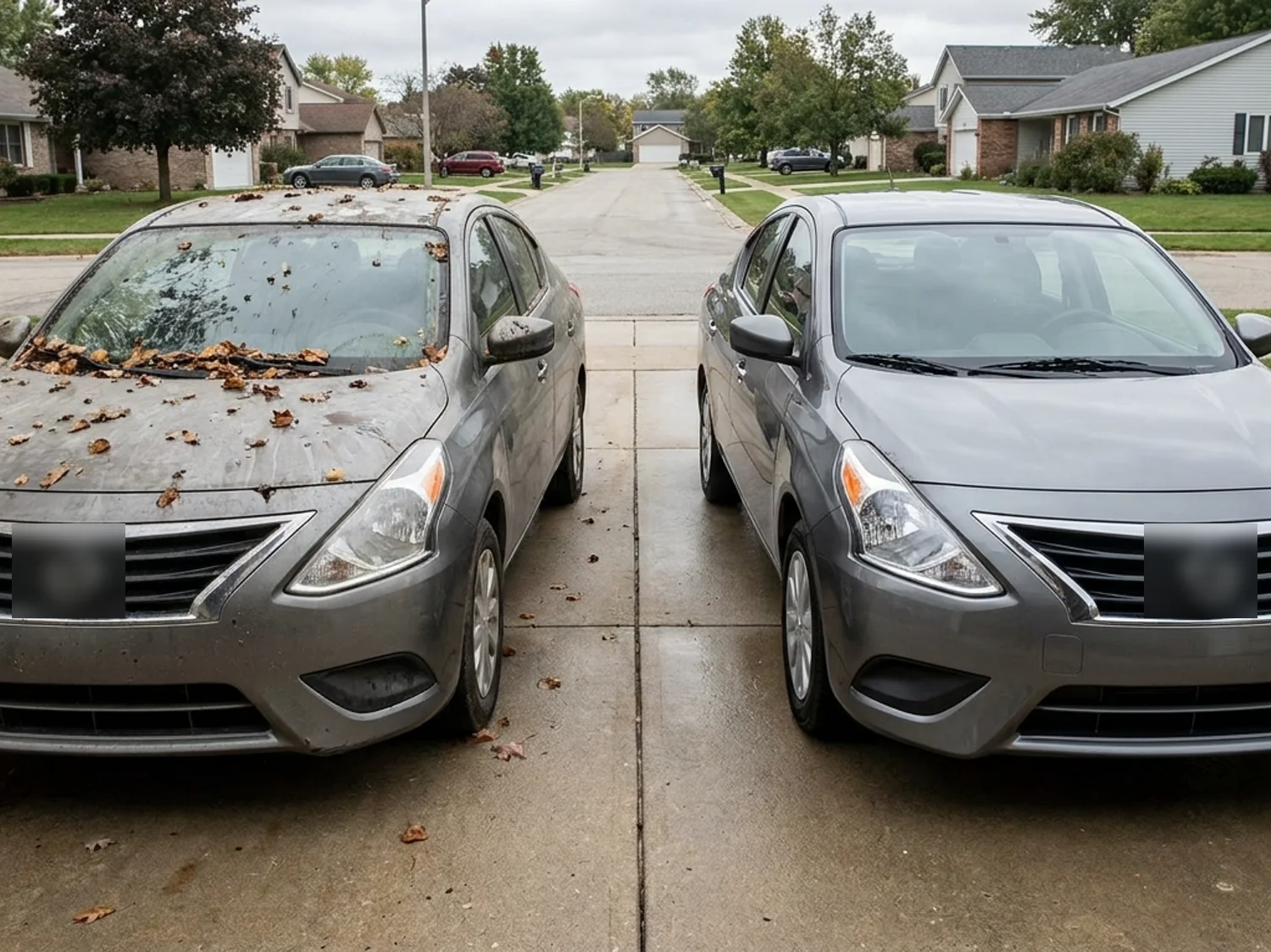
Choice One: park outside the way you have been parking outside. Buy the wax in April. Notice the roof looks dull in a year or two. Get told by a man like me that the clear coat is gone and it is a respray, and pay four figures for eleven minutes of weather you did not watch.
Choice Two: spend two minutes an evening and $89.99 once, and let the sun and the sap and the ice land on fabric for the next few years.
I wrote the estimates for nineteen years. I know which one I would pick, and I picked it before I retired.
Get Yours for $89.99Notes From People Who Park Outside
Two cars in the driveway, one covered and one not, and after one winter you can tell from the porch which is which. The strap under the car is the part I did not expect to care about. Wind takes fifty on the ridge here and it has not shifted once.
I bought it for hail season and I keep it for the mornings. No scraping. I pull the cover back and the glass is dry and I am gone. My husband thought it was a waste of ninety dollars until the first February.
Fits my crew cab with a little room at the tailgate, which is fine. One star off because the first time on took me nearer ten minutes than two, and I would have liked a mark showing which end is the front. Second time was quick.
We park under a live oak, which anyone in the south will tell you is a slow disaster. Sap, pollen, birds, all of it. Now it all lands on the cover and the cover goes over the fence with the hose once a month.
I am 71 and I can get it on alone, which was my only real question. It is not heavy, it just takes a walk around the car. The bag it comes in actually holds it, which is more than I can say for the last one I owned.
That is the note I would have wanted handed to me across the counter, before I wrote anyone an estimate.
Ray retired in May. He still looks at cars from the doorway, and he is still right about which ones sat outside.
P.S. The sentence of Ray's I keep repeating is the one about never having resprayed a panel that lived under a cover. Nineteen years of paperwork on my side of the shop agreed with him, and it took me eleven of those years to act on it.
P.P.S. Orders leave the warehouse within 48 hours and arrive in four to eight business days. If you want it on the car before the first hard freeze, that is the arithmetic.
Stop Paying for Weather You Can Park Under
The Tarnuvek All-Weather Car Cover, five layers, fleece lined, three sizes, storage bag in the box and ninety days to decide, is $89.99 with free US shipping.
Check Your Size and Get Yours for $89.99